Eating healthy doesn’t mean completely changing the way you eat. One simple way to improve your everyday nutrition is to add more nutrient-rich foods to meals you already enjoy.
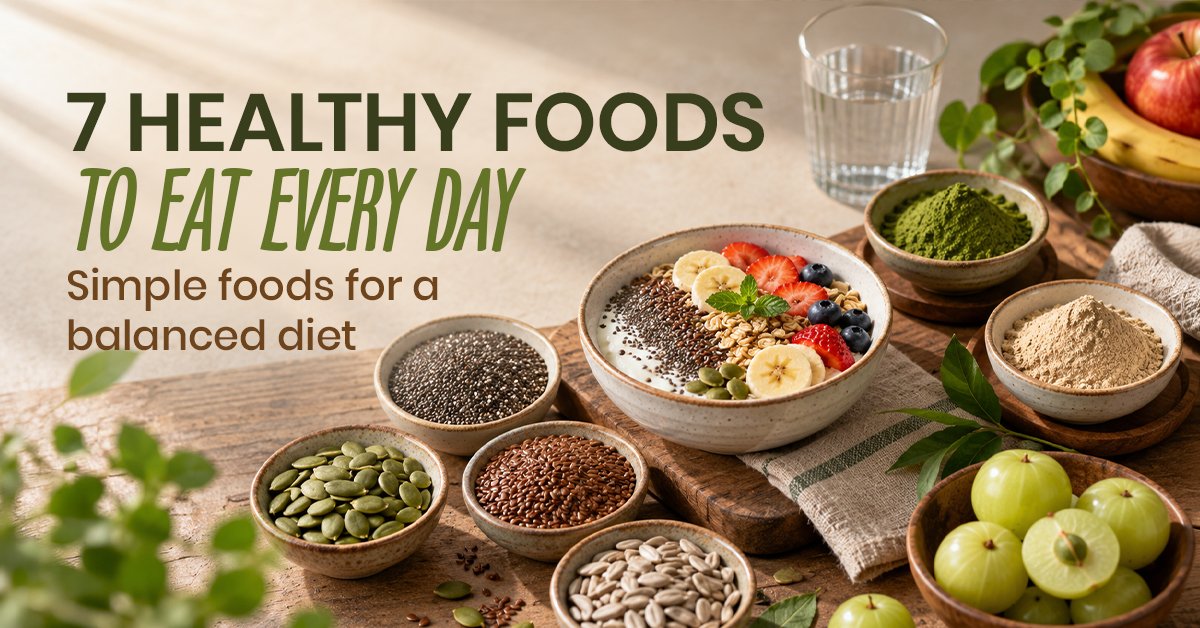
Chia seeds, flax seeds, pumpkin seeds, sunflower seeds, amla and moringa can all fit into different meals and routines. They provide a range of nutrients, including fibre, plant-based protein, healthy fats, vitamins, minerals and other plant compounds.
In this guide, we’ll explore 7 healthy foods to eat every day, simple ways to include them in your meals, and practical habits that can help you build a more balanced diet.
The key is variety. No single food provides everything your body needs. A balanced eating pattern includes different foods in appropriate portions and focuses on habits you can maintain over time.
Quick Guide: 7 Healthy Foods to Eat Every Day
| Food |
Easy Ways to Include It |
| Chia Seeds |
Yoghurt, oats, smoothies and fruit bowls |
| Flax Seeds |
Dalia, smoothies, yoghurt and chapati or dosa batter |
| Pumpkin Seeds |
Salads, oatmeal, yoghurt and homemade snacks |
| Sunflower Seeds |
Salads, breakfast bowls, granola and trail mixes |
| Moringa Powder |
Smoothies, juices, soups, dal and chutneys |
| Amla |
Chutneys, drinks, smoothies and traditional recipes |
| Ashwagandha |
Milk, smoothies or suitable beverages according to product instructions |
1. Chia Seeds
Chia seeds are a convenient way to add dietary fibre, plant-based protein and healthy fats to everyday meals.
Their small size makes them easy to mix into foods you already eat. You don’t need complicated recipes or major changes to your routine.
How to Eat Chia Seeds
Try adding chia seeds to:
- Overnight oats
- Smoothies
- Yoghurt or curd
- Fruit bowls
- Homemade puddings
- Breakfast cereals
Another popular option is chia pudding. Simply combine chia seeds with milk or a plant-based milk alternative and allow the mixture to rest until it develops a pudding-like consistency.
For an easy breakfast, mix chia seeds into yoghurt, oats or your favourite smoothie.
Tip: If your current diet is low in fibre, introduce chia seeds gradually and make sure you drink enough water throughout the day.
2. Flax Seeds
Flax seeds are another nutritious ingredient that can become part of everyday meals. They contain dietary fibre and are a plant source of alpha-linolenic acid (ALA), an omega-3 fatty acid.
With their mild, nutty flavour, flax seeds work well in both sweet and savoury foods.
How to Include Flax Seeds in Your Diet
Ground flax seeds can be added to:
- Oatmeal
- Dalia
- Smoothies
- Yoghurt
- Homemade energy bites
- Chapati or dosa batter
Grinding flax seeds is a simple way to incorporate them into everyday recipes.
If you’re new to high-fibre foods, start gradually and drink enough water throughout the day.
For a simple routine, try adding ground flax seeds to breakfast or a homemade snack.
3. Pumpkin Seeds
Pumpkin seeds are a convenient source of plant-based protein, healthy fats and several minerals.
They require little preparation, which makes them useful as a snack or a crunchy topping for everyday meals.
Easy Ways to Eat Pumpkin Seeds
You can add pumpkin seeds to:
- Salads
- Smoothie bowls
- Oatmeal
- Soups
- Yoghurt
- Homemade trail mixes
Roasted or plain pumpkin seeds can also be kept ready for a convenient snack.
For more variety, combine pumpkin seeds with sunflower seeds, nuts and dried fruits to make a simple homemade snack mix.
Simple idea: Sprinkle a small serving over a salad or breakfast bowl for added crunch.
4. Sunflower Seeds
Sunflower seeds are an easy way to add variety and nutrients to everyday meals.
They provide healthy fats, protein and nutrients including vitamin E. Their naturally crunchy texture also makes them a useful topping for salads, breakfast bowls and other foods.
How to Use Sunflower Seeds
Try adding sunflower seeds to:
- Salads
- Breakfast bowls
- Homemade granola
- Yoghurt
- Trail mixes
- Oatmeal
You can also combine sunflower seeds with pumpkin seeds, nuts and dried fruits for a homemade snack mix.
If you’re looking for an easy place to start, sprinkle them over yoghurt, oatmeal or a salad.
5. Moringa Powder
Moringa powder is made from dried moringa leaves and is commonly used as a concentrated plant-based ingredient in wellness routines.
Moringa leaves contain a variety of nutrients and plant compounds, including vitamins, minerals and antioxidants. Because the powder is concentrated, it is generally used in smaller amounts as part of a daily food routine.
How to Use Moringa Powder
Moringa powder can be added to:
- Smoothies
- Juices
- Soups
- Dal
- Chutneys
- Warm water
It can also be incorporated into other suitable foods according to the serving instructions provided with the product.
If you’re trying moringa powder for the first time, follow the recommended serving size rather than assuming that more is better.
For a simple morning routine, you can add the recommended serving to a smoothie or another suitable drink.
Remember: Moringa powder should complement a varied diet rather than replace vegetables, fruits or other nutritious foods.
6. Amla
Amla, also known as Indian gooseberry, has been part of Indian food traditions for generations. It naturally contains vitamin C and can be enjoyed in several different forms.
Fresh amla can be eaten on its own or used in traditional recipes. Amla powder can also be incorporated into suitable foods and drinks.
Simple Ways to Include Amla
You can add amla to:
- Homemade drinks
- Chutneys
- Smoothies
- Traditional recipes
- Warm water
- Fruit preparations
Amla can be included as part of a varied diet, but no single ingredient should be considered a replacement for balanced eating.
If you’re using amla powder, follow the serving instructions provided with the specific product.
Easy idea: Add amla to a homemade drink or chutney if you enjoy its naturally tangy flavour.
7. Ashwagandha: A Traditional Herbal Ingredient
Ashwagandha is a traditional Ayurvedic herb rather than a conventional food. It is commonly included in modern wellness routines, particularly by people interested in relaxation and stress management.
Ashwagandha is available in different forms, including powders and extracts. Because products can differ in strength and recommended use, always check the instructions for the specific product you are using.
How to Include Ashwagandha in Your Routine
Depending on the specific product and its recommended usage, ashwagandha may be incorporated into beverages such as milk or smoothies.
Always follow the serving instructions provided with the product.
Important: If you take medication, have an existing medical condition, or are pregnant or breastfeeding, speak with a qualified healthcare professional before using ashwagandha or other herbal supplements.
Ashwagandha should not be treated as a replacement for medical treatment or a balanced diet.
How to Add Healthy Foods to Your Daily Routine
Trying to change everything at once can make healthy eating difficult to maintain. A better approach is to make small changes that fit naturally into your existing meals.
Breakfast
Start with a balanced breakfast and add chia seeds to yoghurt, oats or a smoothie.
Lunch
Add vegetables, pulses or whole grains to your meal. If you enjoy seeds, sprinkle pumpkin or sunflower seeds over a salad.
Snack
Keep a small homemade mix of seeds, nuts and dried fruits available for a convenient snack.
Evening
Ground flax seeds can be added to a suitable meal, smoothie or homemade snack.
Daily Wellness Routine
If you use moringa powder, incorporate it according to the recommended serving size provided with the product.
You don’t need to consume every food on this list every day. Instead, choose different nutritious foods and create a routine that suits your meals, preferences and lifestyle.
How to Build a Healthy Daily Diet
Adding healthy foods to your meals is only one part of good nutrition. A balanced diet should include a variety of foods from different food groups.
Eat a Variety of Foods
No single food provides every nutrient your body needs.
Include vegetables, fruits, whole grains, pulses, nuts, seeds and other nutritious foods as part of a varied eating pattern.
Since different foods provide different nutrients, variety is an important part of building balanced meals.
Choose Whole and Minimally Processed Foods
Whenever possible, build your meals around whole or minimally processed ingredients.
Fresh vegetables, fruits, whole grains, pulses, nuts and seeds can all have a place in a balanced diet.
You don’t need to completely eliminate foods you enjoy. Instead, focus on improving your overall eating pattern and making choices you can maintain.
Stay Hydrated
Water is essential for everyday health.
Make drinking enough water throughout the day part of your regular routine, especially during hot weather or when you’re physically active.
Pay Attention to Portions
Even nutritious foods should be eaten in appropriate portions.
Nuts and seeds are nutrient-dense, but that doesn’t mean you need to consume large amounts. Follow suitable serving recommendations and consider your individual dietary needs.
Focus on Consistency
A healthy routine doesn’t need to be perfect.
What matters more is making nutritious choices consistently over time. Small habits that you can maintain are often more practical than extreme changes that are difficult to continue.
Healthy Foods vs. a Healthy Diet
Adding chia seeds, flax seeds, pumpkin seeds or moringa powder to your routine doesn’t automatically make your entire diet healthy.
A balanced diet depends on the overall pattern of what you eat. Vegetables, fruits, whole grains, pulses, nuts, seeds and other nutritious foods all have a place in a varied eating pattern.
Think of the foods in this guide as additions to a balanced diet, not replacements for it.
The goal is simple: add variety, choose nutritious ingredients and build habits you can maintain.
A Simple Daily Food Routine
Morning
Start your day with a balanced breakfast and add chia seeds to yoghurt, oats or a smoothie.
Mid-Morning
If you need a snack, consider a small serving of nuts or seeds instead of highly processed snack foods.
Lunch
Include vegetables, pulses or whole grains in your meal. Pumpkin or sunflower seeds can be sprinkled over a salad if you enjoy them.
Evening
Add ground flax seeds to a suitable meal, smoothie or homemade snack.
Daily Wellness Routine
Moringa powder can be incorporated into a smoothie, drink or suitable meal according to the recommended serving size.
The goal isn’t to consume every ingredient on this list every day. Instead, choose a variety of nutritious foods and build a routine that works for you.
Frequently Asked Questions
What are the best healthy foods to eat every day?
There isn’t one food that is healthiest for everyone. A balanced diet can include vegetables, fruits, whole grains, pulses, nuts, seeds and other nutrient-rich foods. Chia seeds, flax seeds, pumpkin seeds, sunflower seeds and amla can all be included as part of a varied diet.
Can I eat chia seeds every day?
Chia seeds can be included regularly as part of a balanced diet. Because they contain dietary fibre, introduce them gradually if your current diet is low in fibre and drink adequate water.
What is the best way to eat flax seeds?
Ground flax seeds can be added to oatmeal, smoothies, yoghurt, dalia and homemade recipes. If you’re increasing your fibre intake, introduce them gradually and follow suitable serving recommendations.
Can I eat pumpkin seeds every day?
Pumpkin seeds can be included as part of a balanced diet. They provide plant-based protein, healthy fats and several minerals. Since seeds are nutrient-dense, appropriate portions are important.
Can I eat sunflower seeds every day?
Sunflower seeds can be a nutritious addition to everyday meals. They provide protein, healthy fats and nutrients including vitamin E. Add a suitable portion to salads, breakfast bowls, yoghurt or homemade snack mixes.
How can I add moringa powder to my diet?
Moringa powder can be mixed into smoothies, juices, soups, dal or other suitable foods. Always follow the serving instructions provided with the specific product.
Is amla good to include in a daily diet?
Amla can be included as part of a varied diet. It naturally contains vitamin C and can be enjoyed in foods, drinks, chutneys, smoothies and traditional preparations.
Is ashwagandha a food or a supplement?
Ashwagandha is a traditional herb and is commonly used in modern wellness products in forms such as powders and extracts. It should not be treated as a replacement for a balanced diet or medical treatment.
Can healthy foods replace a balanced diet?
No. Individual foods and supplements should not be considered replacements for a varied and balanced diet. Overall dietary variety and eating habits are more important than relying on a single ingredient.
How can I start eating healthier?
Start with small changes that are easy to maintain. Add more vegetables and fruits to your meals, include nutritious foods such as nuts and seeds, choose whole or minimally processed foods more often and stay adequately hydrated.
About Nivlif Organic
At Nivlif Organic, we believe everyday wellness starts with simple choices and quality ingredients.
Nivlif focuses on natural foods and wellness products that can fit into practical everyday routines.
Darshan Patidar, Founder of Nivlif Organic, focuses on building the brand around quality, sourcing and consistency.
Shruti Patidar, Certified Health Coach, contributes health and wellness expertise to Nivlif’s approach.
For specific health conditions, allergies, medication-related concerns, pregnancy or breastfeeding, consult a qualified healthcare professional before using herbal supplements.
Final Thoughts
Eating healthier doesn’t have to be complicated.
You don’t need to completely change your meals or follow an unrealistic diet plan. Start with small changes and focus on habits that you can maintain.
Add chia seeds to breakfast. Try ground flax seeds in your meals. Keep pumpkin or sunflower seeds available as a snack. Include amla in suitable foods and drinks. If you use moringa powder, follow the recommended serving size.
Most importantly, remember that healthy eating is about the overall pattern of your diet, not one individual ingredient.
The goal isn’t to make your diet perfect overnight. The goal is to make better choices that you can continue tomorrow, next week and months from now.
Explore Nivlif Organic for natural foods and wellness products designed to fit into simple everyday routines.


 Organic Wellness
 Super Seeds
 Combos & Value Packs